
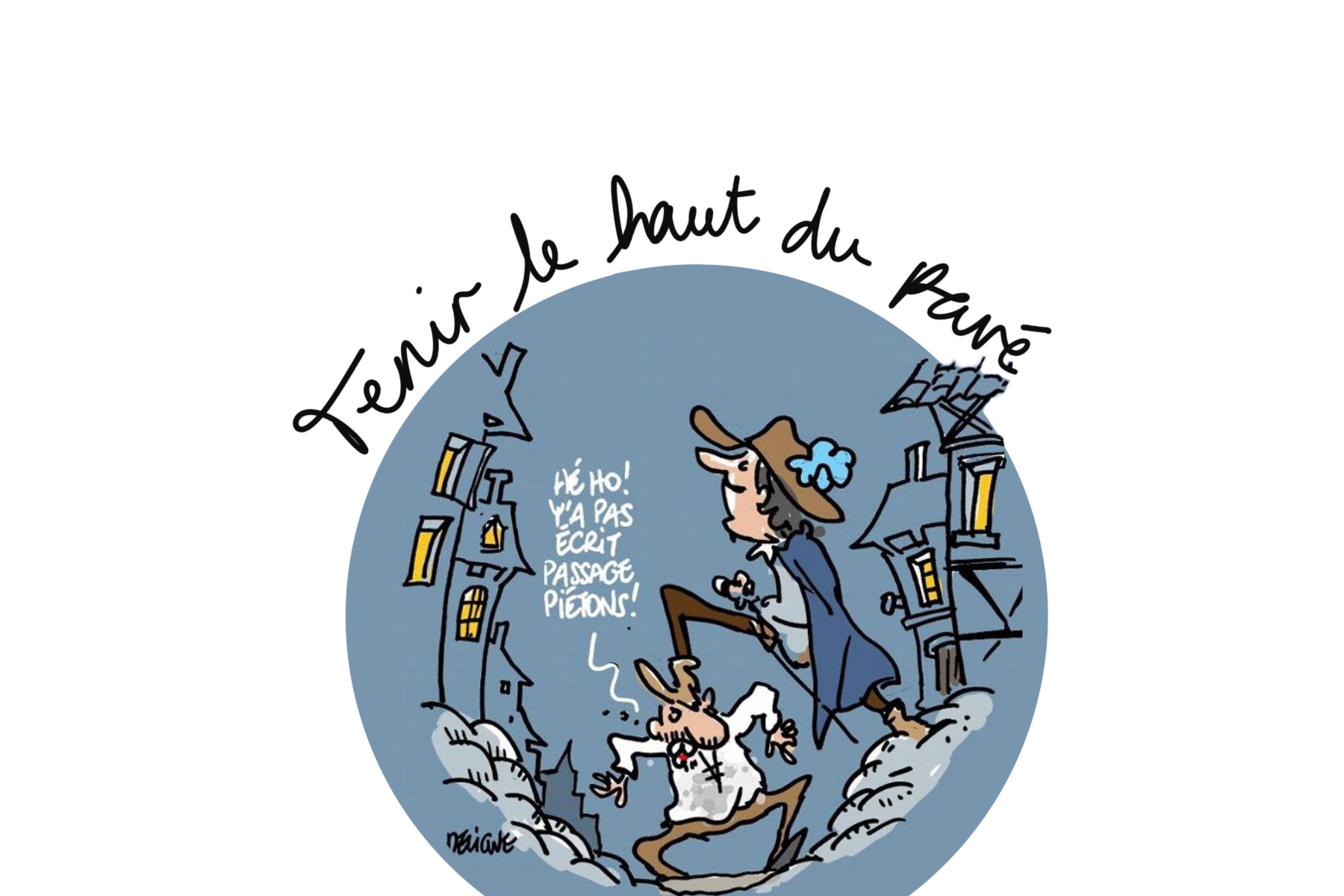
Literal Translation
To hold the upper side of the pavement
Actual Meaning
To be in a high social position
Etymology
In the Middle Ages, streets were paved and had no pavements (read ‘sidewalk’). As a result, the streets were built in a V shape: the road rose up towards the facades of the buildings to allow wastewater to flow into the central part of the street.
It is easy to imagine that walking along these sloping streets was neither easy nor very clean. Passers-by therefore got into the habit of walking on the upper part of the street, along the houses, to avoid stepping in the dirty sewage.
The streets were also particularly narrow: houses and buildings were built very close to each other to protect the street from the rain. As these narrow streets did not allow people to pass each other while staying on the upper part along the facades, the conventions of the time dictated that when two people met, the poorer of the two would stand in the middle, allowing the richer person to walk on the ‘high side of the pavement’ so as not to get dirty.
This expression has retained its original meaning, referring to high social status. By extension, today it also refers to a person who stands out from others in society.