Literal Translation
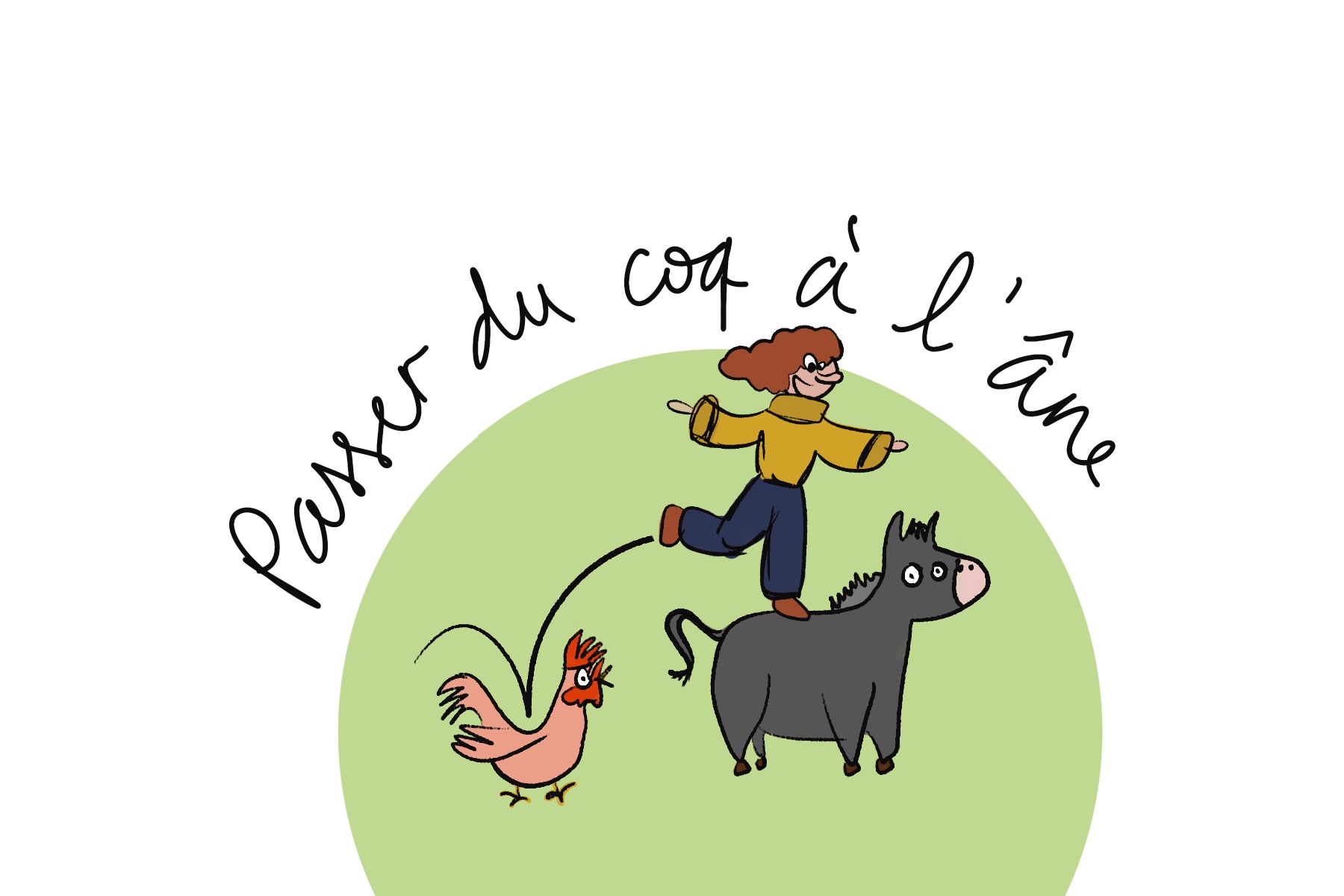
To go from the rooster to the donkey
Actual Meaning
To jump from one topic to another without logic or transition
Etymology
This is a very old French expression. The poet Clément Marot is said to have used it for the first time in the title of one of his letters. It was written as ‘du coq à l’asne’ (from the rooster to the donkey). While the expression means to jump from one subject to another without any logical connection, there does not seem to be any logic in the choice of these two animals either, other than that they were familiar at the time. Claude Duneton believes that the donkey could have been a duck, that the word may have been distorted over time, and that the misunderstanding was that of a rooster mistaking a duck for a hen! This could make sense: ‘asne’ was the word for female ducks, whom the king of the barnyard would sometimes try to mate with. Towards the end of the Middle Ages, “saillir du coq à l’âne” got closer its current meaning, pointing out incoherent subject-changing by mocking by the silly cockerel aiming for the wrong mate. Later, it was used to accuse someone of changing subjects as a diversion.