
“Let’s be realistic”
“The cute factor is good enough”
“This is just about fun”
“The choir remains steadfastly ambitious”
All of these have been heard or said about children’s choirs. Only the last one has led to a youth choir in one of the country’s most deprived areas to win two gold medals at this year’s World Choir Games — Barnsley Youth Choir. Their secret sauce? Not something in the water that creates abnormally talented children, not limitless resources, not even boundless enthusiasm alone, but a clear commitment to ambition and high achievement from the moment it was set up. Ambition for and on behalf of every child that walks through that door.
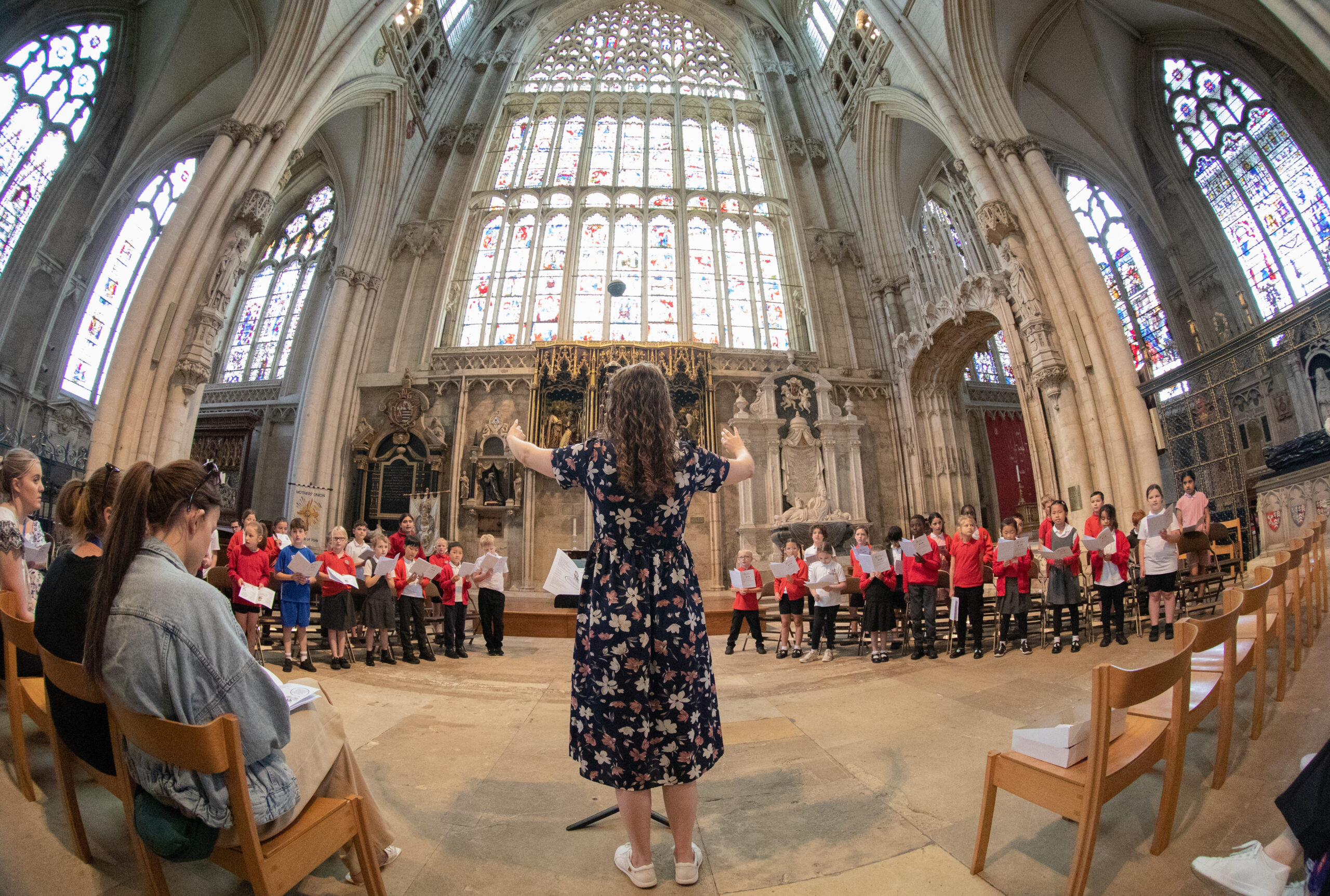
The best piece of feedback I ever received after a children’s performance was “this is what happens when you have high expectations”. And it was true. I had challenged the children to learn complex music in a short period of time, to sing in harmony, to stand and behave a certain way while on stage. None of them were left behind, and all of them — SEND, bookworms, high achievers — performed beyond most adults’ expectations. They sang in Latin, they sang in harmony, they sang from memory, they filled a cathedral with sound.
But lately, I have come to realise that it seems ambition is yet another privilege of the wealthy, and ambition for children from different socioeconomic backgrounds is looked on with a wry smile and called “unrealistic” or “delusional”. Those children have a ceiling placed on their achievement before they even try anything. Children with SEND are told they can only achieve to a certain extent. Meanwhile, children in more privileged parts of society are expected to perform to the highest standard, not just academically but in their school musicals, choirs, and orchestras. No one questions whether they can; questions are only asked when the standard is perceived as being too low.
And children know.
They know when we don’t expect much. They know when adults don’t believe they can do this. They know when they can get away with the bare minimum.
Do they learn? Do they gain skills for life? Do they make memories and find out what they are truly capable of? Do they become confident and feel they have the right to believe in themselves?
No.
There is a name for this: the Pygmalion effect. Studies show that teachers’ belief in and expectations of their pupils shapes their performance as much as if not more than natural ability. But high expectations take work. They take inner strength, and the willingness to fight off skepticism on children’s behalf. It is much easier to simply say “let’s be realistic”: to give up before they even have a chance to prove us wrong, to avoid disappointment by lowering the bar.
The effects of adults’ belief in children’s ability go far beyond musical achievement: music-making is often credited with increased confidence, and confidence is now widely accepted as a huge predictor of future achievement.
Jade Bowler, a strong advocate for state schoolers, said:
“The day I realised I went to a state school was when I interviewed for Oxford University at 17. Suddenly, I was introduced to students my age who had learned Latin by age 11, had travelled the world by age 15, and who had done so many mock interviews that they walked the Oxford halls like they’d already gotten in.”
This is crucial. Confidence was the differentiator between her and her privately educated peers. Feeling like they had a right to be there, like they belonged.
But making music doesn’t automatically give anyone confidence. It can do the opposite. It can teach that half-heartedly singing along to a backing track is the best children can expect of themselves, that excellence is reserved for those with the means to pay for it. The difference? High expectations.
“High expectations” doesn’t have to mean leaving some behind to keep the standard high. It means believing that each child is capable of surprising themselves and us, of not limiting what we expect of them and encouraging them to outdo themselves. Low expectations are what leave children behind: letting them stop trying, letting them believe there’s nothing else to aspire to.
How can children feel they can achieve things, have a sense of pride and belonging if we teach them that the best they can do is “cute”? That “just showing up” is the best they are expected to do? That anything outside of school is meant to just be “fun”?
It also strikes me as reductive or even insulting to assume that for most children, fun and achievement are somehow mutually exclusive, that in order for something to be fun, it must be low stakes and low effort.
When “good enough” becomes the motto, when ambition stops, everything else stops: dreams shrink, self-belief disappears, and the status quo remains. I’ve watched state-educated children stand next to a private school choir at a local festival and visibly shrink, certain they didn’t belong on the same stage until I forcefully told them otherwise. That’s not innate talent. That’s belief, or the absence of it.
We can make choirs free. We can give away instruments. We can even provide transport. But if we don’t believe that children can excel, that they can meet and exceed our high expectations, that they deserve to sing in amazing places, then they will never even consider that stepping out on a world stage is a possibility for them; the inequalities and barriers will always remain. And ambition, followed by achievement, pride, and confidence, will remain the prerogative of the wealthy.